LMS
LMS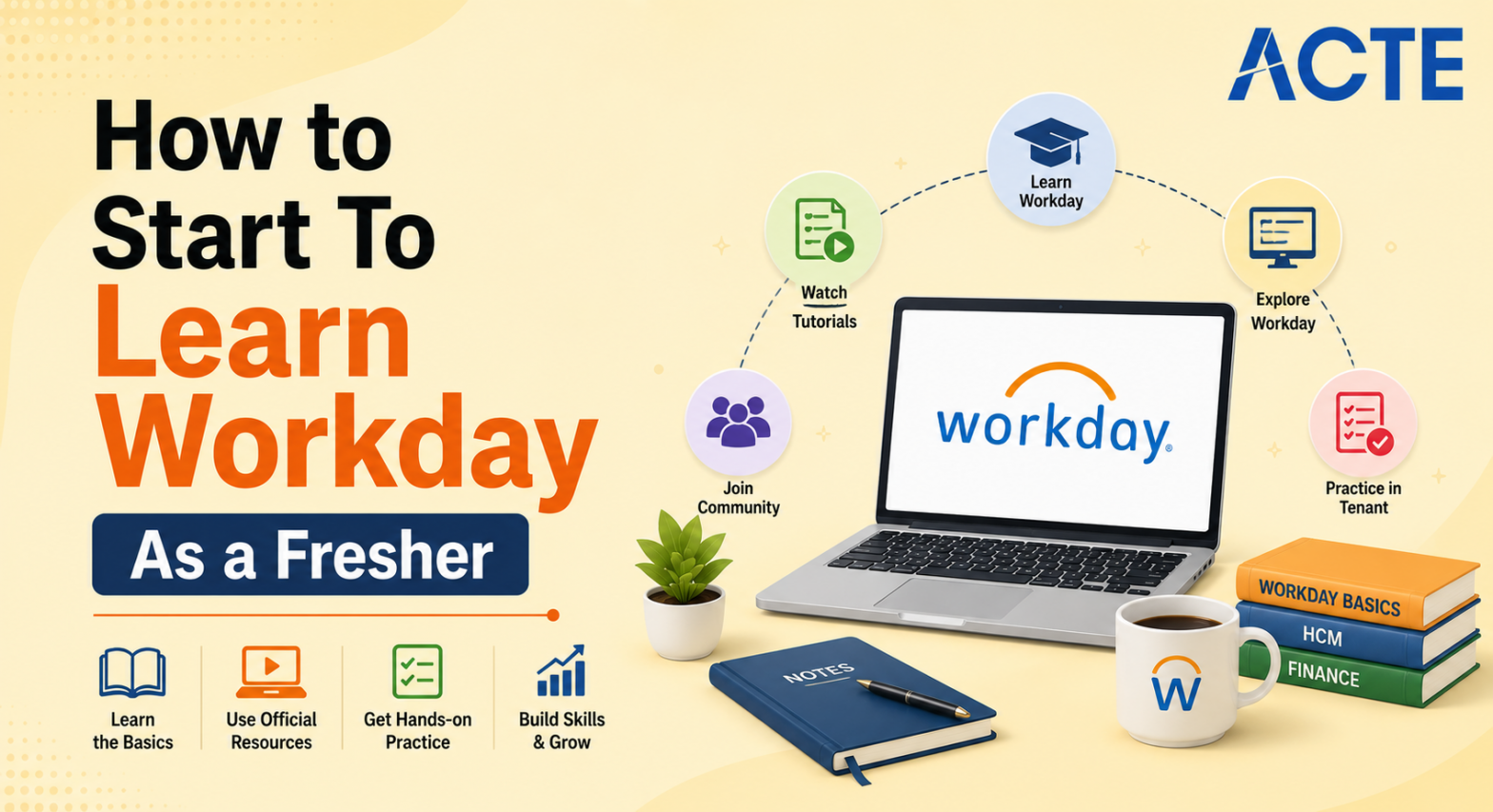
Last updated on 16th May 2026| 11133

- How to Start To Learn Workday As a Fresher
- Understanding Workday vs Legacy Systems
- Selecting Your First HCM Module
- Finding Official Workday Training Resources
- Getting Hands-On Sandbox Practice
- Mastering Workday Navigation and Terminology
- Learning Core Business Process Flows
- Preparing for the Workday Certification Exam
- Conclusion
How to Start to Learn Workday As a Fresher
Starting your enterprise software career with Learn Workday As a Fresher is a brilliant move, but the biggest hurdle is simply figuring out where to begin. Unlike coding languages where you can just download a free editor and start typing, Workday is a closed ecosystem. You cannot just Google “Workday login” and get access to a practice environment. This lack of public access makes the initial learning phase feel incredibly intimidating for freshers in Workday Training . However, once you crack the code on how to access the right materials, the learning curve is actually much smoother than older ERP systems. You do not need to learn complex programming languages to succeed here. Workday is all about understanding how businesses manage their people and finances, and then configuring the software to match those processes. Below is a clear, step-by-step roadmap designed specifically to help freshers bypass the confusion and start building real Workday skills from scratch. Staying consistent with this roadmap ensures faster results, and focusing on practical exposure makes you stand out in interviews. Over time, this approach transforms you from a fresher into a confident Workday consultant.
Understanding Workday vs Legacy Systems
Before you open the software, you need to understand why Workday even exists. For decades, companies ran their HR and finance departments on legacy systems like PeopleSoft or SAP ECC. These older systems were built on outdated code, required massive servers on-site, and looked like software from the 1990s. Workday was built from scratch purely for the cloud, meaning it runs entirely on the internet, updates automatically without breaking customizations, and has a clean interface similar to modern mobile apps. The biggest technical difference is that Workday uses a unified data model. In older systems, HR and payroll were separate databases that had to talk to each other through clunky integrations. In Workday Training, everything is connected. Understanding this core philosophy early on prevents you from trying to apply outdated, fragmented thinking to a modern unified system. When you grasp this, the rest of the software makes logical sense. Building clarity on this difference ensures stronger preparation, and focusing on the unified model builds credibility. Over time, this knowledge positions you as a fresher who can confidently explain Workday’s advantages in interviews.
Ready to Get Certified in Workday ? Explore the Program Now Workday Training Offered By ACTE Right Now!
Selecting Your First HCM Module
- Starting with Core HCM: Core HCM is the absolute foundation of the entire Workday platform. It covers the basic structure of a company, how employees are set up, and how organizational hierarchies are built. You cannot learn Recruiting or Payroll without first understanding Core HCM, making it the mandatory starting point for every fresher.
- Exploring Recruiting: Once you understand how employees are structured, Recruiting is the easiest next step. It follows a logical flow of posting a job, receiving applications, interviewing, and making an offer. It is highly visual and very easy to grasp if you have ever applied for a job online yourself.
- Moving to Talent and Performance: This module focuses on employee growth after they are hired. You learn how to set goals, conduct annual reviews, and track worker skills. It requires a bit more understanding of corporate psychology, but the configuration is relatively straightforward.
- Considering Payroll Later: Payroll is incredibly complex and heavily regulated. While it pays the highest salaries, thats Why Workday professionals are high demand it is a terrible starting point for freshers because it requires deep knowledge of tax codes and legal compliance. Save this module for after you have a year of Core HCM experience.
- Avoiding Module Overload: The fastest way to fail as a beginner is to try to learn everything at once. Pick Core HCM, master it completely, get certified in it, and secure your first job. You can always learn additional modules later once you are getting paid to work on client projects.
Finding Official Workday Training Resources
Finding Official Workday Training is a proprietary system, you cannot find high-quality, up-to-date training on public platforms like Udemy. The official learning materials are locked behind Workday’s partner network. If you are currently in a university, the best route is to check if your college is part of the Workday Student Program, which gives you free access to official training and certification vouchers. If you are a graduate looking to switch careers and Workday Jobs For Freshers, you will need to enroll with an authorized Workday training partner. Yes, these official courses cost money, but trying to learn Workday entirely from random YouTube videos will only teach you how to click buttons, not how to configure business processes. You must invest in official courseware if you want recruiters to take you seriously. This structured training is the only way to guarantee you are learning the correct, up-to-date methods. Staying committed to official training ensures credibility, and focusing on structured learning builds long-term expertise. Over time, this investment positions you as a fresher who can confidently clear certification and step into consulting roles.
Getting Hands-On Sandbox Practice
- Why Sandbox Access is Mandatory: You cannot learn to drive a car by reading a manual, and you cannot learn Workday by just watching videos. You need a sandbox, which is a safe, fake environment where you can practice configuring the system without breaking anything.
- Bundling Access with Training: The easiest way to get sandbox access is to enroll in an official training course. Most authorized partners include four to six weeks of tenant access bundled with the training material so you can practice exactly what you are reading.
- Renting a Tenant: If you are studying on your own or your training access expires, there are third-party vendors online who rent out Workday sandboxes by the month and Becoming a workday consultant. This is a standard practice in the industry and a necessary expense for serious learners.
- Practicing Real-World Scenarios: Do not just log in and click around randomly. Treat your sandbox like a real project. Build a fake company, create departments, hire five fake employees, and run them through a performance review cycle. This builds practical muscle memory.
- Documenting Your Steps: Keep a detailed notebook or digital document of every configuration step you take in the sandbox. Include screenshots. When you are sitting in a job interview and they ask you to explain a process on a whiteboard, these notes will save your life.
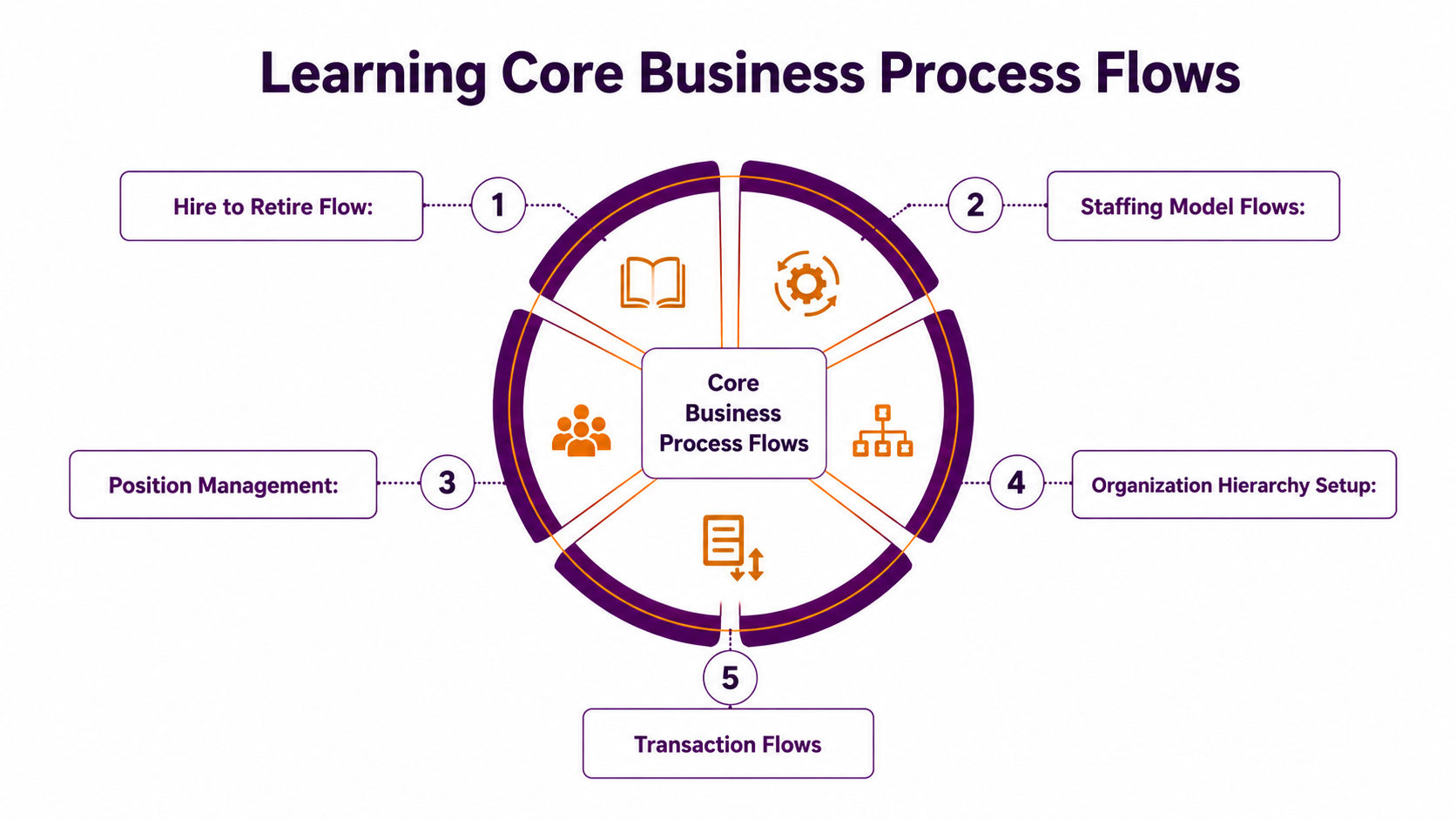
- Hire to Retire Flow: This is the most fundamental concept in Workday HCM. You need to understand the exact steps an employee takes from the moment they are a candidate to the day they resign or retire. Knowing this end-to-end flow is the foundation of all HCM consulting.
- Staffing Model Flows: You must understand the difference between hiring a contingent worker, an internal employee, or an external contractor. Workday HCM Basics handles these different types of workers in completely separate ways, and configuring the wrong staffing model is a massive rookie mistake.
- Position Management: Learn how companies use positions to budget for headcount. You need to know how to create a vacant position, attach it to a cost center, and then hire a worker into that specific slot. This connects HR data directly to finance data.
- Organization Hierarchy Setup: Before any workers can be hired, the company structure must exist. Practice creating supervisory organizations, location hierarchies, and custom organizations. This structural setup is always the first task a junior consultant is given on a real project.
- Transaction Flows: Understand how to initiate business processes like a promotion, a transfer, or a termination. Learn how these transactions route through approval workflows based on the supervisory hierarchy. Mastering these basic workflows proves you understand how the system operates daily.
Excited to Obtaining Your Workday Certificate? View The Workday Training Offered By ACTE Right Now!
Are You Considering Pursuing a Workday Master’s Degree? Enroll For Workday Expert Masters Program Training Course Today!
Learning Core Business Process Flows
Want to Learn About Workday? Explore Our Workday Interview Questions and Answers Featuring the Most Frequently Asked Questions in Job Interviews.
Preparing for the Workday Certification Exam
The ultimate goal of learning Workday is to successfully pass the official Workday Associate Consultant certification exam. This certification exam is considered difficult for freshers because it focuses more on real business scenarios than simple theoretical definitions. Candidates must understand how the Workday Training system behaves in different situations, including payroll changes, effective dating, business processes, and employee data management. Memorizing notes or flashcards alone is not enough to clear the exam successfully. Practical sandbox experience is extremely important because learners need hands-on knowledge of configuring and testing real-time scenarios. Spending many hours practicing workflows and system configurations helps students improve problem-solving and analytical thinking skills. The exam is usually conducted online with live proctoring through a webcam to maintain strict exam security and authenticity. Students should treat their preparation seriously and follow a disciplined daily study schedule for several weeks. Reviewing official Workday training manuals and solving practice scenario-based questions can improve confidence and exam performance. Passing this certification becomes strong proof that a learner is prepared to start a professional career in the Workday ecosystem. With dedication, consistency, and practical learning, freshers can successfully achieve certification and enter a high-demand industry.
Conclusion
Figuring out how to start Learn Workday As a Fresher becomes easier when you follow a clear and structured learning path. Beginners should first understand the basics of cloud computing and how Workday is used in HR and finance management. Starting with the Core HCM module is the best option because it builds the foundation for advanced Workday concepts. Freshers must focus on learning navigation, business processes, reporting, and security features step by step. Hands-on sandbox practice is extremely important because practical experience improves confidence and technical understanding. Official training materials and expert-led classes help learners understand real-time industry workflows more effectively. Although certification training may seem expensive at first, Workday Training it acts as a strong investment for future career growth and better salary opportunities. Consistent learning for three to six months can help students build strong functional and technical skills. Workday certification also improves resume value and increases opportunities in multinational companies and consulting firms. Patience, daily practice, and continuous project-based learning are the key factors for long-term success in this field. By following the correct roadmap and staying dedicated, freshers can successfully begin and grow their Workday career journey.